Bpc 157 Peptide Tb500 Does TB500 affect testosterone?
\nDoes TB500 Affect Testosterone? A Real Look at Hormones, Healing, and Peptides
\n\nIf you have spent any time browsing recovery forums or looking into modern wellness protocols, you have likely come across Thymosin Beta-4 or its synthetic derivative, TB500. Originally popular in the athletic and bodybuilding communities, this peptide has caught the attention of a broader audience, including active women aged 25 to 34 who are trying to balance intense fitness regimens with optimal hormonal health. A pressing question frequently surfaces in online discussions: does TB500 affect testosterone levels?
\n\nWhen searching for answers, it is easy to get lost in a sea of aggressive marketing and confusing scientific jargon. Many individuals fear that taking any performance-aligned peptide might accidentally throw their endocrine system out of balance, cause unwanted virilization, or shut down natural hormone production. This article looks directly at the connection between TB500 and testosterone, breaking down what the science actually says, sharing real experiences, and providing an objective view of what this peptide can and cannot do for your body.
\n\nWhat TB500 Peptide Is and Who It Might Fit Best
\nTB500 is a short synthetic peptide that replicates the active region of Thymosin Beta-4, a naturally occurring protein found in high concentrations in blood platelets and various tissues. Its primary biological function is the regulation of actin, a vital protein essential for cell structure, mobility, and wound healing. When a tissue injury occurs, Thymosin Beta-4 is upregulated to promote cell migration, blood vessel growth, and localized tissue repair.
\n\nUnlike anabolic compounds or hormone replacement therapies, TB500 does not operate via the hypothalamic-pituitary-gonadal axis. It is not designed to stimulate or suppress sex hormones. Instead, it acts as a cellular repair signal. For this reason, it is primarily considered by individuals dealing with stubborn tendonitis, ligament tears, chronic muscle strains, or persistent joint inflammation that standard rest and physical therapy fail to resolve fully.
\n\nWho fits this profile best? Typically, it appeals to active adults, including women in their late 20s and early 30s, whose lifestyles demand efficient physical recovery but who want to avoid systemic hormonal fluctuations. Because its mechanism focuses strictly on cellular structure and repair rather than endocrine pathways, it is often viewed as a targeted recovery tool rather than a performance-enhancing drug that alters your body\'s hormonal baseline.
\n\nPractical Benefits and Where It Falls Short
\nIn practice, the effects of TB500 can vary significantly based on individual biology, injury severity, and product quality. When looking into how TB500 impacts the body, it is essential to look at both successful implementations and cases where the compound failed to deliver results.
\n\nPositive Case Study: Sarah, a 31-year-old competitive cross-functional athlete, developed a persistent partial rotator cuff tear that stalled her training for six months. Traditional physical therapy offered minimal relief. After researching how TB500 impacts recovery, she opted for a 6-week protocol using subcutaneous injections of 5 mg per week, broken into two 2.5 mg doses. By week three, Sarah reported a noticeable reduction in localized, deep-seated pain and a gradual return of her range of motion. Crucially, as someone who monitors her hormonal health closely through quarterly blood work, her free and total testosterone levels remained completely steady throughout the cycle, with no signs of acne, mood shifts, or cycle disruptions.
\n\nNegative Case Study: On the other end of the spectrum is Elena, a 28-year-old fitness enthusiast dealing with systemic fatigue and generalized knee pain from overuse. Hoping for a quick energy boost and full-body rejuvenation, she purchased an oral blend containing a low concentration of TB500 from an unverified online vendor for around $80. After four weeks of daily use, Elena noticed absolutely no change in her knee discomfort or her energy levels. Furthermore, she experienced mild gastrointestinal upset during the first week. Her experience highlights a major shortcoming: TB500 is highly specific to localized tissue repair and possesses poor oral bioavailability; it is not a cure-all for general fatigue or poorly defined systemic issues.
\n\n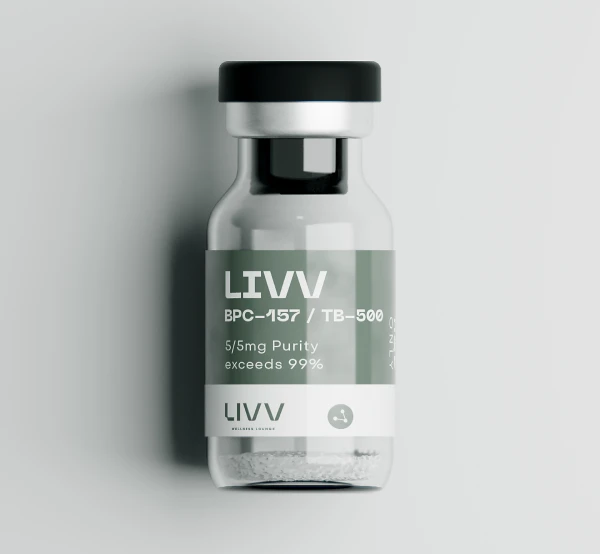 \n
What Research Suggests and What It Doesn\'t: Understanding TB500 Testosterone Interactions
\nWhen examining the exact relationship between the two, clinical evidence shows that the short answer to "does TB500 affect testosterone" is no, it does not directly influence androgen production or receptor activity. Animal studies and early-stage human observations indicate that Thymosin Beta-4 pathways do not overlap with the endocrine feedback loops governing testosterone, estrogen, or progesterone. Because it lacks an aromatic structure and does not interact with the luteinizing hormone, it will not cause virilization symptoms in women or suppress natural production in men.
\n\nHowever, it is crucial to recognize the limitations of current research. Most studies regarding Thymosin Beta-4 and its synthetic derivative have been conducted in vitro (cell cultures) or on animal models. Large-scale, long-term human clinical trials are still limited. While the lack of an endocrine mechanism means there is no direct TB500 testosterone interaction to fear, the lack of extensive human data means long-term systemic risks cannot be definitively ruled out.
\n\nPotential risks of any cell-migratory peptide include the theoretical concern of accelerating pre-existing, undetected cellular abnormalities or oncogenic processes, as angiogenesis (the growth of new blood vessels) is a primary pathway of the compound. Therefore, individuals with a history of abnormal cell growth or specific family health risks are generally advised to approach these compounds with extreme caution.
\n\nIngredients, Formats, and Quality Signals
\nWhen evaluating TB500, understanding product purity and formatting is essential for safety and managing expectations. Authentic TB500 consists of a specific sequence of 43 amino acids (Ac-Ser-Asp-Lys-Pro-Asp-Met-Ala-Glu-Ile-Glu-Lys-Phe-Asp-Lys-Ser-Lys-Leu-Lys-Lys-Thr-Glu-Thr-Gln-Glu-Lys-Asn-Pro-Leu-Pro-Ser-Lys-Glu-Thr-Ile-Glu-Gln-Glu-Lys-Gln-Ala-Gly-Glu-Ser). It should contain no added sugars, fillers, or undisclosed stimulants.
\n\nThe peptide is predominantly sold in two formats: lyophilized (freeze-dried) powder for reconstitution and oral liquids/capsules. It is widely recognized in the scientific community that the delicate structure of the 43-amino-acid chain makes it highly susceptible to degradation by stomach acids and digestive enzymes. Consequently, oral formats are generally considered highly inefficient unless modified with specific protective fragments, which are rare and expensive.
\n\nTo identify genuine quality signals, buyers must look for accessible, third-party High-Performance Liquid Chromatography (HPLC) and Mass Spectrometry (MS) testing reports. These lab results should confirm a product purity rating of at least 98% and verify the exact molecular weight of the peptide chain. Any vendor hiding these lab results or offering unusually low prices should be viewed with skepticism.
\n\n\n\nComparison of Common Recovery Options
\nTo help visualize where TB500 sits in the broader landscape of recovery tools, the following table compares its key characteristics alongside other common formats and alternative compounds available on the market today.
\n\n| Format / Compound | \nTypical Dose/Use | \nPros | \nCons | \nEstimated Cost | \nBest For | \n
|---|---|---|---|---|---|
| Injectable TB500 (Reconstituted) | \n2.5 - 5 mg per week, split into 2 doses for 4-6 weeks | \nHigh bioavailability, direct systemic tissue repair, no hormonal impact | \nRequires reconstitution with bacteriostatic water, needles needed | \n$70 - $120 per 10mg vial | \nAcute tendon, ligament, or muscle tear recovery | \n
| Oral TB500 / BPC Blends | \n500 mcg daily in capsule form | \nNo needles required, convenient to store | \nVery poor absorption rate for TB500, often expensive for the results | \n$80 - $150 per bottle | \nMild localized gut health support (primarily driven by the BPC component) | \n
| Injectable BPC-157 Alone | \n250 - 500 mcg daily for 4-6 weeks | \nExcellent localized angiogenic healing, works well alongside other peptides | \nRequires daily administration, localized site soreness | \n$50 - $90 per 5mg vial | \nTargeted joint inflammation and gastric lining healing | \n
| Traditional NSAIDs (e.g., Ibuprofen) | \n400 - 800 mg as needed for pain | \nImmediate pain relief, cheap, widely available | \nMasks pain rather than healing tissue, can damage gut lining over time | \n$5 - $15 per bottle | \nTemporary management of minor acute swelling | \n
| Anabolic Compounds (for comparison) | \nVaries significantly by substance | \nRapid muscle mass accumulation, significant protein synthesis increase | \nSevere hormonal disruption, virilization in women, shuts down natural production | \nVaries widely | \nAggressive muscle growth (not recommended for safe, hormone-neutral recovery) | \n
Buying Framework and Red Flags
\nNavigating the peptide marketplace can be tricky due to a lack of strict retail regulations. To protect your health and your wallet, follow this clear buying framework and watch out for these prominent red flags:
\n\n- \n
- Check the Lab Dates: Ensure the third-party purity reports (COAs) are dated within the last 3 to 6 months. Disreputable sellers often recycle a single passing report from years ago. \n
- Avoid "Pre-Mixed" Liquids: Peptides are highly unstable once dissolved in liquid. If a company sells TB500 pre-reconstituted in a vial without proper refrigeration during transit, the peptide will likely be completely degraded by the time it reaches your door. \n
- Verify the Labeling: Legitimate suppliers sell these compounds explicitly labeled "For Research Use Only." Brands making bold, commercial health claims on the bottle (e.g., "Guaranteed Joint Cure!") are operating outside regulatory boundaries and are frequently cutting corners on purity. \n
- Look for Secure Payment Portals: Be cautious of vendors that exclusively accept unregulated payment methods like untraceable cryptocurrency or peer-to-peer applications without buyer protection, as this often indicates a lack of legitimate business registration. \n
 \n
Common Mistakes and How to Avoid Them
\nOne of the biggest mistakes consumers make when investigating whether does TB500 affect testosterone is assuming that all performance or recovery supplements behave like steroids. This misconception often leads people to buy unnecessary and potentially disruptive Post-Cycle Therapy (PCT) supplements, which can actually cause the very hormonal imbalances they are trying to avoid.
\n\nAnother common misstep is failing to use the correct liquid for reconstitution. Peptides must be mixed with sterile Bacteriostatic Water containing 0.9% benzyl alcohol to prevent bacterial growth. Using standard sterile water or saline means the solution must be discarded after a single use, as it lacks the preserving agents required to keep the vial safe for multi-dose protocols.
\n\nFinally, many users do not keep accurate logs of their experiences. When starting a recovery protocol, it is essential to track your pain levels, joint mobility, and overall systemic feelings daily. Without a structured log, it becomes difficult to determine if a specific peptide is actually working or if your recovery is simply the result of natural healing over time.
\n\nFAQ: Addressing Your Core Peptide Questions
\n\nIs it proven that TB500 works for chronic tendon injuries?
\nWhile numerous animal trials and widespread anecdotal reports from athletes show significant acceleration in tissue repair, large-scale, double-blind human clinical trials are still limited. It is widely considered an experimental compound rather than a universally proven medical cure. It should be approached as a supportive tool rather than a guaranteed solution.
\n\nHow long does it take for TB500 to show noticeable results?
\nMost individuals report experiencing initial shifts in localized inflammation and pain reduction within 2 to 3 weeks of a consistent, high-purity injectable protocol. Complete tissue recovery or noticeable improvements in stubborn, long-term structural injuries typically require a full 4 to 6-week cycle combined with focused physical rehabilitation.
\n\nWhat are the primary side effects of TB500 you should watch out for?
\nThe most common side effects are mild and localized, including temporary redness, itching, or slight bruising at the injection site. A small percentage of users report a brief, transient rush or mild headache immediately after administration, which is usually attributed to localized changes in blood pressure. Because it does not interact with the endocrine system, it does not cause androgenic side effects like hair loss, voice deepening, or mood swings.
\n\nCan it combine with BPC-157 for a more comprehensive recovery cycle?
\nYes, combining TB500 with BPC-157 is one of the most common recovery protocols used in the fitness community. The two compounds work via complementary pathways: BPC-157 excels at promoting localized angiogenesis and early-stage granulation tissue at the immediate injury site, while TB500 supports broader cell migration and structural repair across a wider physical area. This combination does not alter the non-hormonal profile of either compound.
\n\nWhat are the real-world differences between oral vs injection alternatives for this peptide?
\nThe core difference comes down to structural integrity and bioavailability. Injecting reconstituted freeze-dried powder subcutaneously allows the peptide to enter systemic circulation fully intact. Conversely, standard oral versions are largely broken down by the digestive system, rendering them mostly ineffective for systemic injuries. If needles are a firm barrier, users generally have to look toward alternative modalities like targeted physical therapies, laser treatments, or specialized medical oversight rather than relying on standard oral TB500 supplements.
\n\n\n\nA Practical 2-Week Experiment Framework
\nIf you choose to explore this pathway after consulting a healthcare professional, using a highly conservative, measured approach can help you assess your body\'s tolerance while minimizing risks. Below is a standard baseline framework used by researchers to evaluate individual sensitivity over a 14-day period.
\n\nDay 1 to Day 3 (Tolerance Testing): Administer a minimal micro-dose of 500 mcg subcutaneously into the abdominal fat layer. Monitor the area for 24 hours for severe allergic reactions, unusual swelling, or systemic hives. If any negative symptoms appear, stop the protocol immediately.
\n\nDay 4 to Day 7 (Establishing the Baseline): If no adverse reactions occur, move to a standard conservative dose of 2 mg split into two distinct applications (e.g., 1 mg on Monday and 1 mg on Thursday). Keep a daily journal noting localized pain levels on a scale of 1-10, tracking any changes in sleep quality or digestion.
\n\nDay 8 to Day 14 (Evaluation Phase): Maintain the 2 mg weekly split. Watch closely for any unexpected systemic reactions, such as lethargy or headaches. By Day 14, evaluate your journal entries: if there is no shift in localized discomfort and you experience ongoing side effects, it is a clear sign that your body is not responding optimally to the compound or the product purity is compromised.
\n\nAbout the Author
\nClara Vance is an independent wellness journalist and product researcher specializing in modern recovery protocols, peptide developments, and preventative health options for active women. Over the past seven years, Clara has reviewed dozens of fitness supplements and consumer health trends, focusing on objective analysis, lab verification, and debunking marketing hype. She holds a degree in biological sciences and works closely with independent laboratories to analyze consumer wellness products.
\n\nDisclaimer: The information provided in this article is strictly for informational, educational, and entertainment purposes. It does not constitute medical advice, diagnosis, or treatment. TB500 is largely classified as a research chemical in many jurisdictions, and its long-term safety profiles in humans are not fully established. Always consult with a qualified physician or endocrinologist before introducing any experimental peptide or supplement into your routine.
\n
Discussion