Bpc 157 Peptide Capsules Is BPC-157 on amazon legit?
\nIs BPC-157 on Amazon Legit? A Critical Review for Women Over 40
\n\nIf you are a woman in your mid-40s to mid-50s navigating the frustrating realities of stubborn joint aches, slower recovery times, or persistent digestive imbalances, you’ve likely encountered discussions about peptides. Among them, BPC-157 has garnered significant attention for its theoretical tissue-repair capabilities. Naturally, given the convenience of modern e-commerce, the first instinct for many consumers is to search for it on a trusted, everyday platform. This leads directly to a highly debated question across wellness forums: Is BPC-157 on Amazon legit?
\n \nThe sudden surge in searches for this phrase highlights a major gap between consumer demand and marketplace reality. When joint stiffness starts interfering with your morning walks or fitness routines, finding an easy-to-order capsule online feels like the perfect solution. However, navigating online marketplaces for experimental compounds requires a high degree of skepticism. This objective review explores the regulatory environment, ingredient profiles, and actual consumer experiences to help you understand what you are truly buying when you browse these platforms.
\n\nWhat BPC-157 Regimes Are and Who They Might Fit Best
\nBPC-157, or Body Protective Compound-157, is a synthetic peptide derived from a protein naturally found in human gastric juice. In scientific circles, it is categorized as a cellular signaling molecule. Its primary mechanism involves promoting angiogenesis—the formation of new blood vessels—which is a fundamental pillar of tissue regeneration, collagen synthesis, and mucosal lining repair.
\n \nFor women aged 45 to 54, the biological landscape is shifting. Declining estrogen levels during perimenopause and menopause frequently result in reduced collagen production, thinner mucosal barriers in the gut, and decreased joint elasticity. Consequently, this demographic is often the most interested in what BPC-157 offers. It is typically sought out by individuals experiencing chronic tendonitis, mild osteoarthritis, or leaky gut symptoms who feel that standard joint supplements like glucosamine or collagen powders are no longer delivering adequate support.
\n\nPractical Benefits and Where It Falls Short
\nWhen evaluating any supplement or compound, it is vital to weigh historical real-world data against documented failures. For some, finding the right dietary support provides minor, incremental comfort, while for others, unregulated products result in zero changes or unexpected adverse reactions.
\n \nA Case of Realistic Expectations: Consider the experience of Sarah, a 49-year-old amateur tennis player from Ohio. Suffering from chronic Achilles tendonitis for eight months, she decided to seek out professional peptide guidance. After sourcing an authentic oral arginate form of BPC-157 from a specialized compounding pharmacy (not an online retail marketplace), she used a daily dose of 500 mcg. Over a six-week period, she noted a subtle, gradual reduction in morning stiffness and a 30% improvement in her recovery time after matches. It was not a miraculous, overnight cure, but it offered a functional baseline improvement when paired with physical therapy.
\n \nA Case of Marketplace Failure: Conversely, Elena, a 52-year-old accountant from Texas, looked into the trend online and asked herself, is BPC-157 on Amazon legit? She purchased a $45 bottle of "BPC-157 complex capsules" from a prominent retail merchant. The label boasted high-potency recovery benefits. After three weeks of taking two capsules a day, she experienced no change in her shoulder discomfort. Worse, she developed mild, persistent nausea and stomach cramping. Upon closer inspection of the fine print, she realized the product contained mostly standard amino acid blends and undisclosed fillers, with no verifiable peptide content whatsoever.
\n\n \n
\n What Research Suggests and What It Doesn\'t
\nTo accurately understand the context behind buying BPC-157 on Amazon, we have to look closely at the scientific literature. The majority of published research detailing the impressive tissue-healing properties of BPC-157 has been conducted in vitro (cell cultures) or in vivo on animal models, such as rats and mice. These studies have shown remarkable acceleration in the healing of transected Achilles tendons, collateral ligaments, and gastric ulcers.
\n \nHowever, robust, large-scale, double-blind human clinical trials are notably lacking. The scientific community has not yet established comprehensive safety profiles, definitive optimal dosages, or long-term systemic impact studies for humans. Because it is an unapproved therapeutic substance, regulatory bodies like the FDA have restricted its use in compounding pharmacies, and major consumer retail platforms officially ban the sale of active, prescription-grade therapeutic peptides. Therefore, any product explicitly marketed as genuine therapeutic BPC-157 on standard consumer platforms is operating in a legal gray area, frequently mislabeling its contents to bypass automated compliance filters.
\n\nIngredients, Formats, and Quality Signals
\nTrue BPC-157 primarily exists in two oral formats: BPC-157 Acetate and BPC-157 Arginate. The acetate version is cheaper to manufacture but highly unstable in gastric acid, meaning it degrades quickly in the stomach before it can be systematically absorbed. The arginate salt form is a stabilized variation engineered to survive the highly acidic environment of the human stomach, making it significantly more effective for oral consumption.
\n \nWhen evaluating any brand online, specific quality standards must be verified to ensure safety:
\n- \n
- Third-Party ISO Certification: The product batch must be verified by an independent, ISO-accredited laboratory. \n
- Purity Testing (HPLC/MS): A legitimate manufacturer will readily provide a recent High-Performance Liquid Chromatography (HPLC) and Mass Spectrometry (MS) report demonstrating a peptide purity rating of 98% or higher. \n
- Current Good Manufacturing Practices (cGMP): The facility where the product is bottled must hold verified cGMP compliance to ensure no heavy metal or microbiological contamination. \n
Comparison of Common Options
\nTo help navigate the marketplace landscape safely, the table below breaks down the typical formats consumers find online, their realistic use cases, and average associated costs.
\n\n| Format | \nTypical Dose/Use | \nPros | \nCons | \nCost | \nBest For | \n
|---|---|---|---|---|---|
| Stabilized Arginate Salt | \n250 - 500 mcg twice daily (Oral) | \nHighly stable in stomach acid; excellent systemic absorption. | \nRarely found on mass consumer platforms; premium price tag. | \n$90 - $130 per bottle | \nTargeted joint recovery and gut lining support. | \n
| Standard Acetate Form | \n500 mcg daily (Oral) | \nMore affordable; useful for localized upper GI tract tissues. | \nDegrades rapidly in the stomach; poor lower systemic absorption. | \n$50 - $70 per bottle | \nLocalized mild gastric comfort under supervision. | \n
| Marketplace Amino Mimics | \nVaries widely by label | \nEasy to purchase; fully compliant with retail platform terms. | \nContains no actual intact peptides; mostly basic amino acid powders. | \n$30 - $50 per bottle | \nGeneral, basic protein or amino acid supplementation. | \n
| Injectable Grade (Lyophilized) | \n250 mcg daily (Subcutaneous) | \nDirect systemic bioavailability; bypasses digestion entirely. | \nRequires reconstitution with bacteriostatic water; needle safety risks. | \n$60 - $100 per vial | \nAdvanced localized soft tissue and tendon injuries. | \n
| Topical Creams / Patches | \nApplied 1-2 times daily to skin | \nNon-invasive; easy localized application to joints. | \nExtremely poor skin transdermal absorption rates; unproven efficacy. | \n$40 - $80 per jar | \nPlacebo-supportive comfort for superficial joint areas. | \n
Buying Framework and Red Flags
\nBefore purchasing any item claiming to be a peptide on a general marketplace, run through this verification checklist to avoid buying counterfeit or dangerous lookalike products.
\n \nThe Marketplace Peptide Safety Checklist
\n- \n
- [ ] **Check the exact legal ingredient name:** Does the supplement facts panel say "BPC-157 Arginate", or does it deceptively list individual amino acids like "L-Glutamine, L-Proline, L-Glycine Blend"? \n
- [ ] **Scrutinize the product title:** Beware of listings using intentional misspellings or adding words like "Booster," "Activator," or "Complex" to mask the absence of the real compound. \n
- [ ] **Demand a Batch Certificate of Analysis (COA):** Message the seller directly to ask for an external lab verification sheet. If they ignore you or state it is proprietary, do not purchase. \n
- [ ] **Evaluate the seller profile:** Look closely at the merchant\'s history. Are they an established medical, research, or wellness entity, or are they a generic, newly registered storefront selling random electronics and trendy goods? \n
- [ ] **Identify unrealistic price points:** Authentic, synthesized BPC-157 is an expensive raw ingredient. If a product offers a 60-capsule supply for $25, it is biochemically impossible for it to contain pure, active therapeutic-grade peptides. \n
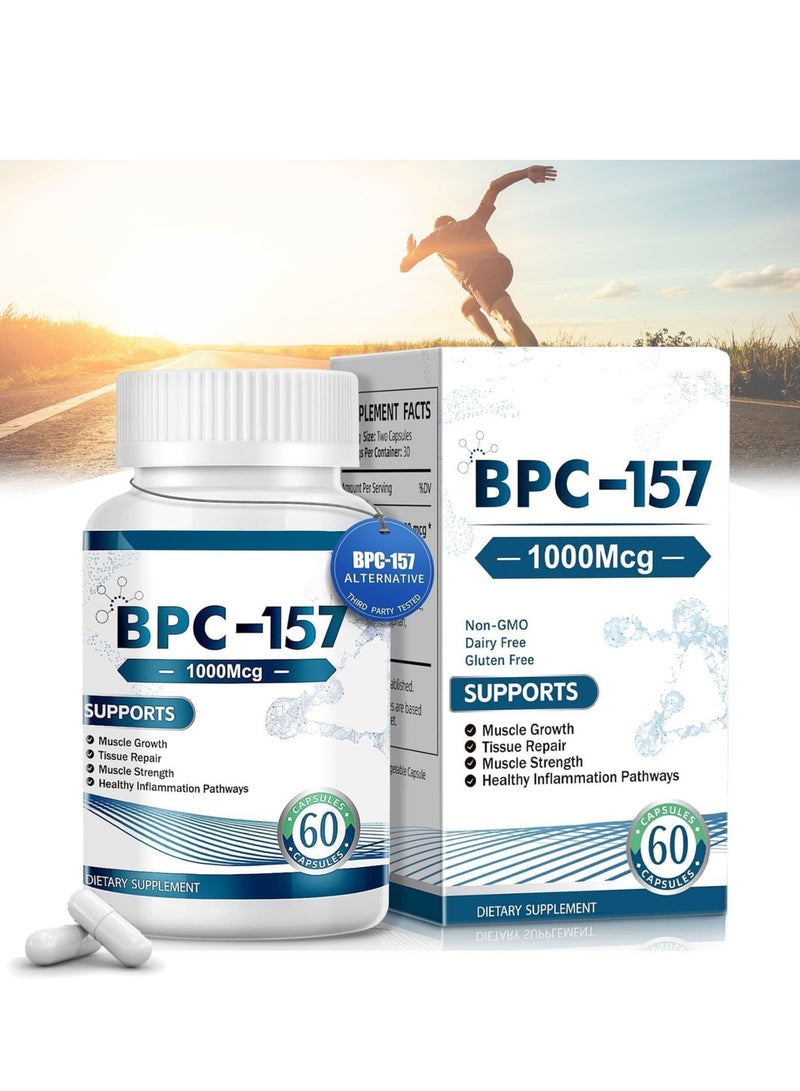 \n
\n Common Mistakes and How to Avoid Them
\nThe single most frequent mistake consumers make when exploring online wellness platforms is trusting lookalike branding. Many companies design their bottles to resemble clinical, pharmaceutical-grade products, utilizing minimalist text, clean laboratory graphics, and complex molecular diagrams. This induces a false sense of medical validity. Consumers often buy these based entirely on 5-star ratings that may be manipulated or written by people reviewing an entirely different product variation.
\n \nTo avoid these pitfalls, remember that major open-box consumer e-commerce companies explicitly prohibit items containing actual therapeutic peptides due to liability and strict regulatory compliance guidelines. Therefore, if you find a product directly indexed under a standard search for BPC-157, it is highly likely a compliance-bypassing formulation that consists of basic vitamins, collagen pieces, or amino acid compounds rather than the true, synthesized 15-amino-acid peptide sequence.
\n\nFAQ
\n \nIs BPC-157 proven to work safely in human clinical trials?
\nNo, the compound is not definitively proven or approved for human therapeutic use through extensive human clinical trials. While animal models demonstrate promising soft tissue and mucosal healing properties, high-quality human data remains extremely limited. Consumers should approach use with caution and understand that current evidence relies largely on pilot studies, cellular research, and anecdotal reports.
\n\nHow long does it take for BPC-157 to work for joint issues?
\nIn clinical research settings involving animal tissues and documented anecdotal cases from medical clinics, initial changes in recovery or localized comfort typically manifest within 2 to 4 weeks of consistent, appropriate dosing. However, individual response times vary drastically depending on the severity of the joint issue, systemic metabolic health, and the authenticity of the compound being utilized.
\n\nWhat are the common side effects of BPC-157 supplements?
\nReported side effects are generally mild but can include gastrointestinal distress, such as nausea, bloating, or stomach cramps—particularly when consuming lower-grade or contaminated marketplace products. Other reported experiences include temporary blood pressure fluctuations, mild headaches, or localized irritation if using an injection format. Long-term systemic side effects in humans remain largely unstudied.
\n\nCan it combine with regular joint health supplements like glucosamine?
\nYes, because it operates on a cellular signaling level rather than providing basic raw structural building blocks, true BPC-157 can technically be combined with traditional joint support supplements like glucosamine, chondroitin, or hyaluronic acid. However, you should always consult a licensed medical professional before combining experimental compounds with your daily supplement regimen.
\n\nWhat is the difference between oral vs injection alternatives for recovery?
\nWhen considering oral vs injection alternatives, the primary difference lies in systemic versus localized bioavailability. Subcutaneous injections deliver the compound directly into the fatty tissue, bypassing the digestive tract entirely for optimal systemic availability, making it popular for tendon injuries. Oral arginate forms are more stable and are generally preferred for targeting gastrointestinal issues or offering systemic support without the logistical risks of needles.
\n\nA Practical 2-Week Experiment Framework
\nIf you choose to move forward with a wellness compound under proper professional guidance, running a controlled tracking period helps you objectively evaluate whether a supplement is providing real benefits or causing adverse reactions.
\n \nPreparation Phase: Establish a clear baseline. Record your daily joint pain levels on a scale of 1-10, note your sleep quality, and track any digestive issues for three days before introducing anything new to your routine.
\n \nDays 1-5 (Introduction): Introduce your chosen product at a conservative, low dose (e.g., 250 mcg orally once per day in the morning on an empty stomach). Monitor strictly for acute adverse events like headaches, stomach upset, or skin flushing. If any adverse symptoms present themselves, discontinue immediately.
\n \nDays 6-14 (Observation): If well-tolerated, move to the standard recommended tracking dose (e.g., 250 mcg twice daily). Continue keeping a daily journal. Note whether morning joint stiffness duration changes, or if recovery time after light exercise decreases. At the end of day 14, compare your journal entries to your preparation phase baseline to determine if there is a verifiable, non-placebo difference worth pursuing.
\n\nAbout the Author
\nMeredith Vance, CNC is a certified nutritional consultant and independent consumer product editor specializing in anti-aging protocols, metabolic wellness, and joint-health research for women over 40. With over nine years of experience analyzing supplement ingredient labels, third-party laboratory data, and e-commerce supply chains, she strives to provide transparent, unbiased health information to consumers navigating complex online wellness trends.
\n \nDisclaimer: The information provided in this article is for informational, educational, and consumer awareness purposes only. It is not intended as medical advice, diagnosis, or treatment. BPC-157 is an experimental compound not fully approved by the FDA for human consumption. Always consult with a qualified healthcare professional or physician before introducing any new supplement, peptide, or compound into your wellness routine.
\n
Discussion